

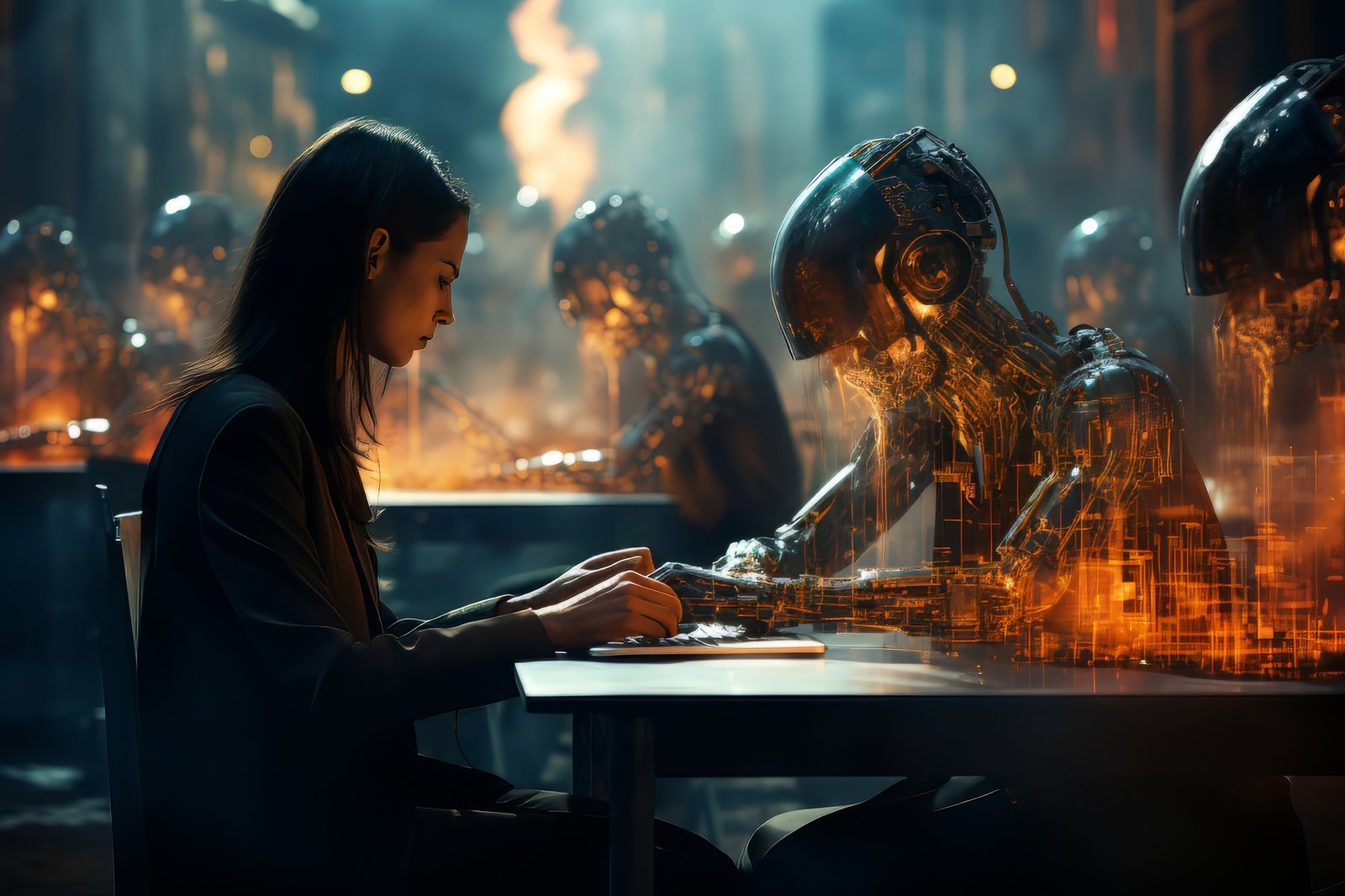
Artificial Intelligence (AI) has moved from science fiction to everyday reality. From generating art and music to writing stories and designing buildings, AI seems capable of everything. But a question now echoes louder than ever – will AI replace human creativity?
The short answer is: no, not entirely. While AI is transforming how we create, it still lacks the emotional depth, intent, and cultural understanding that make human creativity unique. Let’s explore why.
1. What Makes Human Creativity Unique
Creativity is not just about combining data or generating patterns; it’s about emotion, intention, and experience. Humans create because they feel, imagine, and interpret the world through personal experiences.
When a poet writes about love or an architect designs a peaceful space, they draw on emotion – something AI cannot truly replicate. AI can mimic patterns of emotion but doesn’t feel them.
2. How AI Is Enhancing, Not Replacing, Creativity
AI has become a powerful creative assistant. Tools like ChatGPT, Midjourney, and Runway ML help artists and professionals speed up brainstorming, concept generation, and even content production.
Instead of replacing humans, AI is helping us:
- Save time on repetitive tasks
- Explore new ideas faster
- Visualize concepts in seconds
- Collaborate across disciplines
For example, architects use AI to test design ideas, while filmmakers use it to generate scripts and storyboards. It’s collaboration – not competition.
3. The Limitations of AI Creativity
Despite its strengths, AI has boundaries. It cannot:
- Understand cultural nuances or personal emotion
- Judge aesthetic value subjectively
- Create with purpose or intent
AI generates outputs based on training data, meaning it can only remix what already exists. True creativity often comes from breaking the rules – something AI is not designed to do.
4. The Future: Human + AI Co-Creation
The future of creativity is hybrid. We’re entering an era of co-creation, where humans provide emotion, meaning, and vision – while AI offers speed, inspiration, and experimentation.
Imagine:
- Artists using AI to visualize emotions
- Designers using AI to test thousands of variations
- Writers using AI to overcome creative blocks
AI is the tool; the soul of creativity remains human.
5. Ethical & Philosophical Considerations
As AI grows, questions arise about authorship and originality. Who owns an AI-generated artwork? Can a machine have a “creative voice”?
These debates will shape the creative industries of the future. But ethically, humans will always hold accountability and purpose – something algorithms can’t possess.
Conclusion
AI isn’t replacing creativity – it’s reshaping it. It pushes boundaries, but it doesn’t feel passion, empathy, or wonder. The future belongs to creators who embrace AI as a partner, not a rival.
Creativity will evolve – and the human imagination will continue to lead the way.



Leave a Reply
You must be logged in to post a comment.