

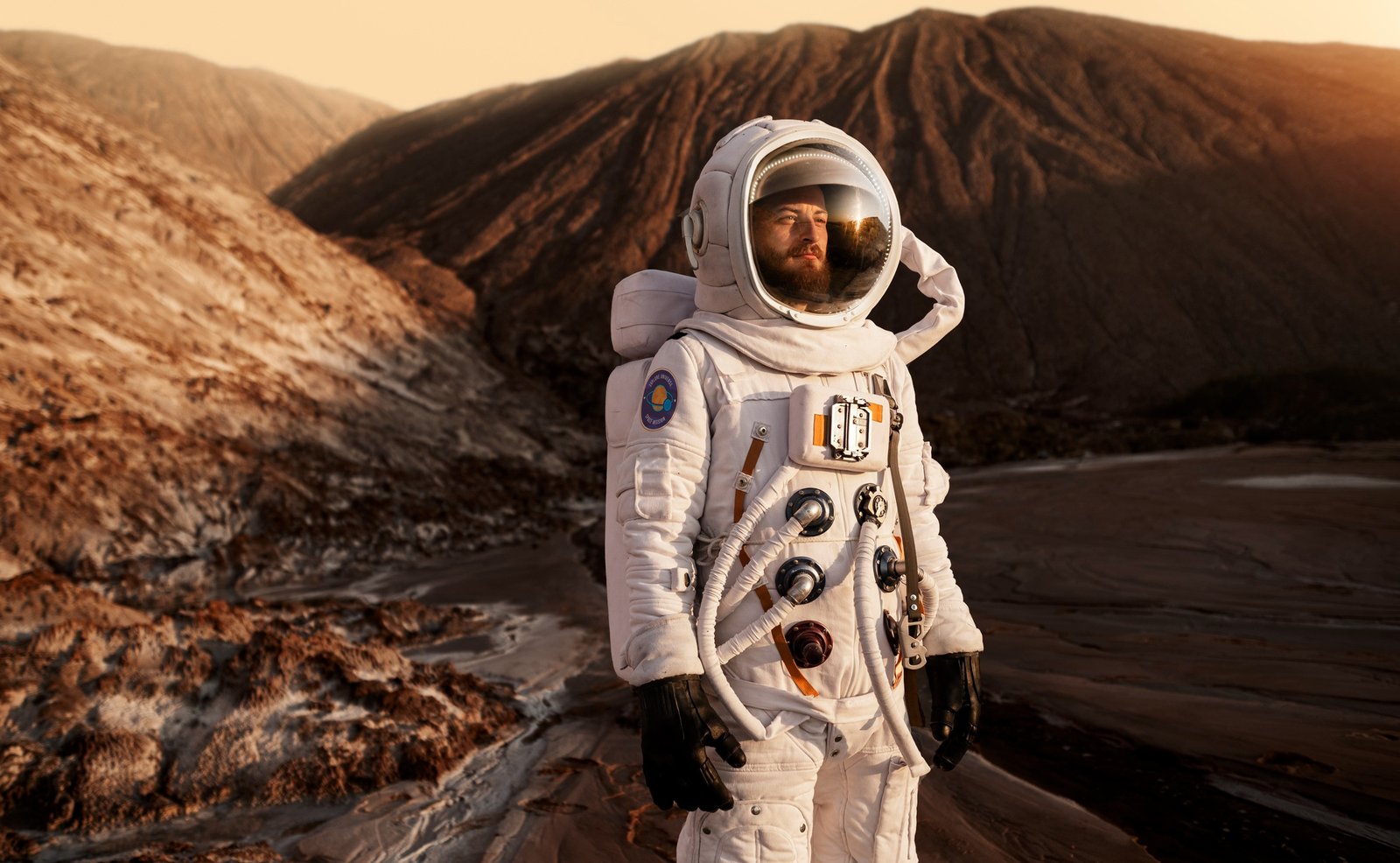
On 22 April 2026, China’s Manned Space Agency made an announcement that sent shockwaves of pride across Pakistan: two Pakistani candidates — Khurram Daud and Muhammad Zeeshan Ali — had been selected for advanced astronaut training in China, with one of them set to become the first Pakistani in space and the first foreign astronaut to board China’s Tiangong space station.
Pakistan’s Prime Minister Shehbaz Sharif met the two candidates in Islamabad on 23 April and called their selection “a new chapter in Pakistan’s history.” China’s Ambassador to Pakistan, Jiang Zaidong, was present at the meeting, describing bilateral space cooperation as “forward-looking.” SUPARCO Chairman Muhammad Yousaf Khan called the development historic.
For a country that has watched India, China, and the United States dominate space exploration for decades, this moment is genuinely significant. This article covers who the two candidates are, what they will do in China, what the mission involves, and what it means for Pakistan’s future in space.
Who Are Khurram Daud and Muhammad Zeeshan Ali?
Both candidates are seasoned pilots from the Pakistan Air Force — a background that reflects the global norm for astronaut selection, where military aviation experience remains the most common pathway into space programmes.
Commander Khurram Daud expressed his gratitude at being selected and promised full commitment to the training process. He described the opportunity as an honour — not just personally but for Pakistan as a nation. Speaking after the PM meeting, he said he was aware of the weight of representing Pakistan in an international space research programme and was determined to meet every challenge the training would present.
Wing Commander Muhammad Zeeshan Ali said the training would include microgravity and simulation exercises — the technical foundation of preparation for spaceflight. He expressed readiness for the challenge and acknowledged that the months ahead would be demanding but purposeful.
Both men were accompanied to the Prime Minister’s Office by astronaut attaché Hasnain Iftikhar from SUPARCO. The meeting was attended by Deputy Prime Minister and Foreign Minister Ishaq Dar, Planning Minister Ahsan Iqbal, Information Minister Attaullah Tarar, Foreign Secretary Amna Baloch, and SUPARCO Chairman Muhammad Yousaf Khan.
How Were They Selected?
The selection process was rigorous and extended. The China Manned Space Agency confirmed that both candidates successfully passed multiple rounds of screening procedures before being announced publicly. The exact criteria for selection have not been fully disclosed, but military aviation experience, physical fitness, scientific aptitude, and psychological resilience are the standard parameters used in astronaut candidate evaluations worldwide.
The foundation for their selection was laid in February 2025, when SUPARCO and the China Manned Space Agency (CMSA) signed a formal cooperation agreement under which two Pakistani astronauts would receive training in China, with one eventually joining a mission to the China Space Station. The April 2026 announcement confirmed that both candidates had successfully passed all required preliminary assessments.
Where Are They Going and What Will They Do There?
Both Khurram Daud and Muhammad Zeeshan Ali have departed for the Astronaut Centre of China (ACC) in Beijing, where they will undergo intensive advanced training. The ACC is the same facility where Chinese taikonauts — the term for Chinese astronauts — train for missions to the Tiangong space station.
Their training programme will include microgravity familiarisation, simulation exercises, equipment handling, emergency procedures, Chinese language training, and specialised preparation for the specific scientific experiments they will carry out in space.
One of the two candidates will ultimately be selected for the actual spaceflight mission. The other will serve as a backup. The selected astronaut will fly as a payload specialist — a crew member whose primary responsibility is to conduct scientific experiments during the mission rather than to operate the spacecraft itself.
What Is the China Space Station (Tiangong)?
The Tiangong space station — Tiangong meaning “Heavenly Palace” in Chinese — is China’s permanently crewed orbital laboratory, operating at an altitude of approximately 340 to 450 kilometres above Earth. It became fully operational in 2022 and has since hosted multiple crews of taikonauts on missions lasting three to six months.
Unlike the International Space Station (ISS), which is a collaboration between NASA, ESA, Roscosmos, JAXA, and the Canadian Space Agency, Tiangong is operated entirely by China — though China has consistently expressed openness to international participation, subject to political and technical agreements. Pakistan will be the first country to send a national to the Chinese space station under this collaborative framework, making the mission historically significant not just for Pakistan but for China’s international space diplomacy.
Pakistan’s mission to the China Space Station is planned for launch in late 2026, SUPARCO confirmed. This means that within months, one of the two candidates currently training in Beijing will be floating weightless above Earth, conducting scientific research in humanity’s most extreme environment.
What Scientific Research Will They Conduct?
SUPARCO confirmed that the Pakistani astronaut’s scientific work aboard the Tiangong station will cover several fields of research, all chosen for their relevance to Pakistan’s development challenges.
Material science — experiments studying how materials behave in microgravity, with potential applications in manufacturing and industrial development.
Fluid physics — research into how liquids and gases behave without gravity, which has implications for engineering, medicine, and energy systems.
Life sciences — biological experiments studying how living organisms — from microbes to human cells — respond to the space environment. This research feeds into both medical science and the long-term feasibility of human space habitation.
Biotechnology — research into biological processes that may work differently or more efficiently in microgravity, with potential applications in pharmaceutical development and food production.
SUPARCO noted that the results of this research have potential benefits for climate resilience, food security, and industrial innovation in Pakistan. Prime Minister Shehbaz Sharif described the mission as “a harbinger of deep space exploration” — signalling that this is intended as the beginning of Pakistan’s space programme, not a one-off event.
Why Is This a Historic Moment for Pakistan?
Pakistan has had a space agency — SUPARCO — since 1961, making it one of the earliest developing nations to establish a space research organisation. SUPARCO has launched satellites, conducted atmospheric research, and trained generations of scientists and engineers. But human spaceflight had always remained beyond reach.
The reasons are familiar: funding constraints, political instability, and the enormous cost and complexity of human space programmes. Even wealthy countries with well-established space agencies — Germany, France, Japan — rely on partnerships with the United States, Russia, or China to send their nationals into space.
Pakistan’s partnership with China for this mission reflects the deepening of bilateral ties that has accelerated dramatically under the China-Pakistan Economic Corridor (CPEC). From infrastructure to energy to now space exploration, the relationship has expanded into virtually every strategic domain. PM Shehbaz Sharif noted that space cooperation “adds new dimensions” to the Pakistan-China partnership.
For ordinary Pakistanis, the significance is straightforward and emotional. Pakistan has produced Nobel Prize-winning physicists, world-class mathematicians, and engineers at the highest levels of global institutions. The idea that a Pakistani — a son of this soil, trained in the Pakistan Air Force — will look down at Earth from the Tiangong space station before the end of 2026 is a moment of national pride that cuts across political divides.
What Happens Next?
April–December 2026: Khurram Daud and Muhammad Zeeshan Ali undergo intensive astronaut training at the Astronaut Centre of China. Training will include physical conditioning, technical education, microgravity simulation, Shenzhou spacecraft familiarisation, and experiment preparation.
Mid-to-Late 2026: One of the two candidates is formally selected for the mission crew. The other is designated as backup.
Late 2026: The selected Pakistani astronaut launches on a Shenzhou spacecraft — the crewed vehicle China uses to ferry astronauts to and from Tiangong — and docks with the China Space Station. The mission duration has not been specified but Chinese crewed missions typically last between three and six months.
During the mission: Scientific experiments in material science, fluid physics, life sciences, and biotechnology are conducted aboard the station.
After the mission: Research results are shared with Pakistani and Chinese scientists. SUPARCO has indicated that this mission is intended to be the foundation of a longer-term Pakistani human spaceflight programme.
What Does This Mean for Pakistan’s Youth?
The selection of Khurram Daud and Muhammad Zeeshan Ali sends a clear message to Pakistan’s enormous population of young people: space is not someone else’s frontier. It is within reach for Pakistanis too — through hard work, scientific education, and military excellence.
Pakistan has one of the world’s youngest populations, with the median age around 22 years. Millions of Pakistani students study physics, engineering, and mathematics in the hope of building careers in science and technology. The announcement of Pakistan’s first astronauts has, in a single day, made space exploration feel real and personal in a way that decades of satellite launches could not.
SUPARCO noted the significance of its space bus programme — a mobile educational unit reaching students in remote areas — as part of the broader effort to build scientific consciousness among Pakistani youth. The astronaut mission now gives that programme its most powerful recruitment tool: living proof that a Pakistani can go to space.
Frequently Asked Questions
Who are Pakistan’s first astronauts?
The two candidates selected are Commander Khurram Daud and Wing Commander Muhammad Zeeshan Ali, both Pakistan Air Force pilots. One of them will become Pakistan’s first person in space in late 2026.
When will Pakistan’s astronaut go to space?
The mission to the China Space Station is planned for launch in late 2026, SUPARCO confirmed. The exact date depends on the completion of training and mission scheduling by the China Manned Space Agency.
What will the Pakistani astronaut do in space?
They will serve as a payload specialist, conducting scientific experiments in microgravity covering material science, fluid physics, life sciences, and biotechnology. These experiments have potential applications in climate resilience, food security, and industrial development.
Why is Pakistan sending astronauts with China and not another country?
The mission is the result of a cooperation agreement signed between SUPARCO and the China Manned Space Agency in February 2025, reflecting Pakistan’s deep and expanding partnership with China under CPEC and broader bilateral ties.
Will the Pakistani astronaut be the first foreigner on the Chinese space station?
Yes. The selected Pakistani astronaut will become the first foreign national to visit China’s Tiangong space station, according to the China Manned Space Agency.
What is SUPARCO?
SUPARCO — the Space and Upper Atmosphere Research Commission — is Pakistan’s national space agency, established in 1961. It is one of the oldest space agencies in Asia.
Stay updated with the latest Pakistan science, technology, and national news at Shark Times.



Leave a Reply
You must be logged in to post a comment.