

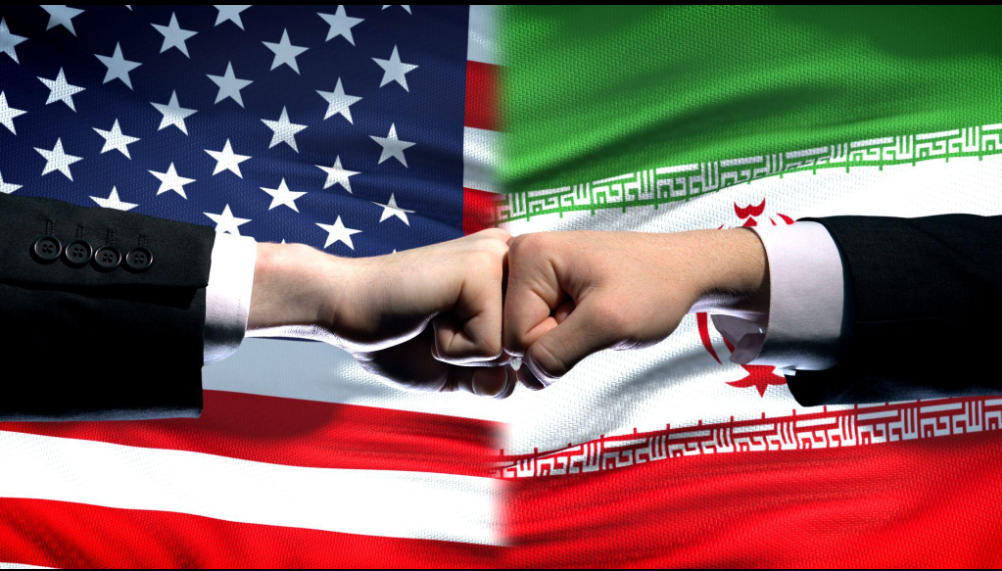
In a dramatic display of Pakistan’s growing role as a neutral mediator between the United States and Iran, Islamabad confirmed on Monday May 4, 2026 that 22 crew members of the seized Iranian cargo ship MV Touska had been evacuated to Pakistan — and that 15 of them had already been repatriated to Iran. The move, described by Pakistan’s Ministry of Foreign Affairs as a “confidence-building measure,” is the most concrete sign yet that Pakistan’s mediation between Washington and Tehran is producing real results on the ground.
This is the full story of what happened, why it matters, and what it means for Pakistan, the US-Iran ceasefire, and the wider regional situation.
What Is the MV Touska and What Happened to It?
The MV Touska is an Iranian-flagged cargo vessel that was seized by United States forces in the Arabian Sea after it “failed to comply” with the US blockade on Iranian ports — one of several naval enforcement actions the US has undertaken since the US-Israel war on Iran began on February 28, 2026.
The US imposed a naval blockade on Iranian ports as part of its broader military and economic pressure campaign against Tehran following the joint US-Israeli air strikes on Iranian nuclear and military facilities. Several Iranian and Iran-linked vessels have been intercepted in the weeks since, creating a new flashpoint on top of the already volatile Strait of Hormuz situation.
The MV Touska was one such vessel. US Central Command (CENTCOM) boarded and seized the ship, detaining its 22 crew members. Under normal circumstances in an active conflict, the fate of those crew members — civilians working on a cargo ship — would be deeply uncertain.
Instead, in a development that would have seemed impossible just weeks ago, the United States arranged for those 22 crew members to be flown to Pakistan on Sunday night May 3. By Monday May 4, Pakistan had facilitated the repatriation of 15 of them directly to Iran.
What Pakistan’s Foreign Ministry Said
Pakistan’s Ministry of Foreign Affairs issued a formal statement confirming the transfer, describing it as a confidence-building measure coordinated with the support of both the Iranian and US sides.
The statement also confirmed that the MV Touska itself — the seized Iranian cargo ship — will be backloaded to Pakistani territorial waters for return to its original Iranian owners after necessary repairs. This means Pakistan is not just facilitating crew transfers but is also acting as a safe harbour for the physical return of seized Iranian property.
The Foreign Ministry concluded its statement with a clear articulation of Pakistan’s position: “Pakistan welcomes such confidence-building measures and will continue to facilitate dialogue and diplomacy while pursuing ongoing mediation efforts for regional peace and security.”
US outlet ABC News confirmed the operation, reporting that US Central Command (CENTCOM) aided in the transfer — meaning both sides cooperated with Pakistan’s facilitation role. There was no immediate comment from Iranian authorities, but the repatriation of Iranian crew members to Iran represents an implicit Iranian acceptance of Pakistan’s mediating role.
Why This Is Historically Significant
To understand why the MV Touska story matters, it helps to understand what Pakistan has achieved diplomatically in the past four weeks.
The US-Israel war on Iran began on February 28. Within four weeks, Pakistan had brokered a fragile ceasefire between the two sides — an extraordinary diplomatic achievement for a country that was simultaneously managing its own economic crisis, the PSL cricket tournament, and serious security pressures on its western border with Afghanistan.
The US-Israeli war on Iran, which began in February, was partly halted four weeks ago after the countries agreed to a fragile ceasefire mediated by Pakistan. However, the ceasefire has been fragile. Washington and Tehran have since engaged in naval confrontations and seizures of commercial vessels — exactly the kind of incidents that could unravel a ceasefire and drag both sides back into open conflict.
The MV Touska resolution is significant precisely because it demonstrates that even in the midst of ongoing naval tensions, the US and Iran are willing to use Pakistan as a channel to de-escalate specific incidents. This is what professional diplomats call a “confidence-building measure” — a small, concrete action that shows both sides are capable of cooperation, building trust incrementally toward a larger peace framework.
Pakistan’s Remarkable Diplomatic Position
Pakistan’s emergence as the key mediator between the United States and Iran is one of the most surprising diplomatic developments of 2026 — and it reflects a set of relationships that few other countries in the world can replicate.
Pakistan has a long-standing and deep relationship with China — the country that brokered the initial Pakistan-Afghanistan ceasefire in April and that has significant leverage with Iran through its own bilateral ties. Pakistan has a complex but substantial relationship with the United States, rooted in decades of security cooperation and reinforced by the IMF’s ongoing $7 billion support programme. And Pakistan shares a long border and deep cultural ties with Iran, with a significant Shia Muslim population that maintains strong connections across the border.
This triangular position — trusted to some degree by Washington, Beijing, and Tehran simultaneously — is extraordinarily rare. Very few countries in the world could credibly serve as an intermediary in a direct US-Iran confrontation. Pakistan is one of them, and it has stepped into that role with a confidence and effectiveness that has surprised many international observers.
Pakistan’s Deputy Prime Minister and Foreign Minister Ishaq Dar has been the central figure in this diplomatic effort, conducting shuttle diplomacy between US envoys Steve Witkoff and Jared Kushner on one side and Iranian Foreign Minister Abbas Araghchi on the other. The Islamabad talks, which began after the ceasefire was announced, aim to convert the fragile military pause into a lasting political framework.
What Is Still Unresolved: The Afghanistan Border Crisis
Even as Pakistan earns international recognition for its Iran mediation, a separate and dangerous crisis is developing on its other border.
Afghanistan’s Taliban-led government has accused neighbouring Pakistan of killing three civilians in a cross-border attack, which Kabul has condemned as a “war crime.” The incident on Monday marked the latest test of a fragile ceasefire between Pakistan and Afghanistan, brokered by China in April, following months of cross-border fighting that left hundreds dead.
Afghanistan’s deputy government spokesman Hamdullah Fitrat said 14 others were injured in the attack, accusing Islamabad of deliberately targeting civilian infrastructure, including homes, schools, a health centre, and mosques in Dangam, Kunar province.
Pakistan’s Ministry of Information and Broadcasting dismissed the allegations, suggesting Kabul may have staged the destruction and calling it a possible “propaganda effort.”
The simultaneous management of two border crises — one with Iran to the west and one with Afghanistan to the northwest — while conducting high-stakes international diplomacy represents an extraordinary test of Pakistan’s government, military, and diplomatic capacity. As one analyst quoted by Al Jazeera noted: “Pakistan’s security situation has worsened considerably since the war on Iran began on February 28.”
Pakistan Navy’s Separate Humanitarian Operation
In a separate but related incident also reported on May 4, the Pakistan Navy provided emergency assistance to a vessel in distress in international waters — demonstrating Pakistan’s broader maritime engagement during the regional crisis.
Pakistan Navy personnel provided emergency assistance to six Indian and one Indonesian crew member aboard the MV Gautam that was sailing from Oman to India when it developed a technical fault at sea. The assistance came after India’s Maritime Rescue and Coordination Centre in Mumbai contacted Pakistani authorities for help. Pakistan deployed a Pakistan Maritime Security Agency ship, PNS Kashmir, to carry out the rescue.
The fact that Pakistan assisted an Indian vessel in distress — during a period of elevated regional tension and while Pakistan itself is managing significant security pressures — is a quiet but meaningful signal of Pakistan’s commitment to maritime safety and international norms. It also underscores that Pakistan’s naval presence in the Arabian Sea is an active and constructive one during the current crisis.
What Happens Next
The immediate diplomatic focus as of May 5 is on whether the US-Iran talks in Islamabad can produce a durable framework before the current ceasefire collapses entirely. Both Washington and Tehran are maintaining their core positions — the US insists on Iranian nuclear disarmament, Iran insists on an end to sanctions and military threats — and the gap between them remains wide.
The MV Touska resolution suggests that both sides retain a channel of communication through Pakistan and are capable of specific cooperative acts even amid broader disagreement. This is encouraging for the prospects of a negotiated settlement, but it is a long way from the comprehensive framework that would genuinely end the crisis.
On the Afghanistan border, Pakistan faces the harder challenge of managing a conflict where the diplomatic tools are fewer and the security pressures more immediate. The TTP — Tehrik-e-Taliban Pakistan — continues to conduct attacks inside Pakistan from Afghan territory, and Islamabad’s cross-border military responses are generating civilian casualties that damage Pakistan’s international standing at precisely the moment it is trying to build its reputation as a peacemaker.
The next few weeks will test whether Pakistan can sustain its remarkable diplomatic balancing act — maintaining the trust of both Washington and Tehran, managing the Afghanistan border crisis, and continuing to function economically under the strain of high energy prices and IMF programme conditionalities.
What This Means for Ordinary Pakistanis
For ordinary Pakistanis watching these events unfold, there are reasons for both pride and concern.
The pride is genuine. Pakistan’s emergence as a credible international mediator — facilitating the return of Iranian sailors, hosting US-Iran peace talks, rescuing Indian sailors in distress — represents a Pakistan that is engaged, capable, and respected on the world stage. Prime Minister Shehbaz Sharif’s government has demonstrated that Pakistani diplomacy can operate at the highest levels of international crisis management.
The concern is equally genuine. Every day that the Strait of Hormuz remains disrupted, Pakistan’s energy costs stay elevated. Every cross-border incident with Afghanistan risks escalation that could demand military resources Pakistan can ill afford. And every week of economic pressure — high petrol prices, rupee weakness, inflation — takes a real toll on the families that can least afford it.
Pakistan’s diplomatic success abroad will only be sustainable if it translates into economic relief at home. Whether that happens depends on how quickly the US-Iran crisis resolves — and that, ultimately, is not entirely in Pakistan’s hands.
Frequently Asked Questions
What is the MV Touska?
The MV Touska is an Iranian-flagged cargo vessel seized by US forces in the Arabian Sea after it failed to comply with the US blockade on Iranian ports following the US-Israel war on Iran that began February 28, 2026.
What did Pakistan do with the MV Touska crew?
Pakistan facilitated the evacuation of 22 MV Touska crew members from US custody to Pakistan, subsequently repatriating 15 of them to Iran. Pakistan also confirmed it will receive the ship itself in Pakistani territorial waters for return to its Iranian owners after repairs.
Why is Pakistan mediating between the US and Iran?
Pakistan has relationships with both sides — a long security and economic partnership with the United States, and deep cultural, geographic, and diplomatic ties with Iran. Its position as a country trusted by both Washington and Tehran, as well as by China, gives it a unique and rare mediating role in the current crisis.
Has the US-Iran ceasefire held?
The ceasefire brokered by Pakistan four weeks ago remains fragile. Naval confrontations and vessel seizures have continued. US-Iran talks in Islamabad are ongoing but no final peace framework has been announced as of May 5, 2026.
What is the situation on the Pakistan-Afghanistan border?
Afghanistan’s Taliban government has accused Pakistan of a cross-border attack killing three civilians in Kunar province on May 4, calling it a “war crime.” Pakistan has denied the allegations. The incident threatens a separate China-brokered ceasefire between Pakistan and Afghanistan.
Stay updated with the latest Pakistan foreign policy and regional news at Shark Times.



Leave a Reply
You must be logged in to post a comment.