

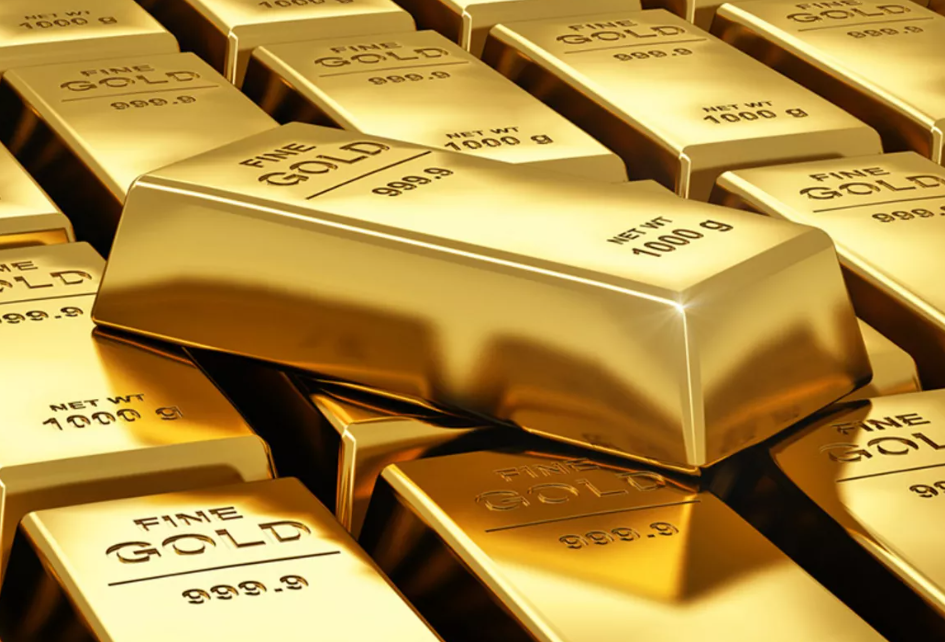
Gold has just delivered one of the most remarkable performances in its history. After surging 64% in 2025 — its biggest annual gain since 1979 — the precious metal broke above $5,000 per ounce for the first time ever on 26 January 2026, peaking at an all-time high of $5,595 on 29 January. As of 14 March 2026, gold is trading around $5,032, having pulled back 10% from that peak — a perfectly normal correction within a powerful long-term uptrend whose fundamental drivers remain entirely intact.
This is not a short-term speculation story. It is a story about a fundamental shift in how investors, central banks, and governments around the world think about wealth, safety, and the reliability of traditional financial systems. This article explains what is driving gold’s historic rise, what it means for Pakistani investors, and where prices are headed next.
The Numbers: How Far Gold Has Come
To understand the scale of gold’s rally, consider the timeline:
Gold began 2026 at $4,384 per ounce on 2 January. Within 26 days, it had already gained more than 15%, pushing through the psychologically critical $5,000 level on 26 January. Three days later, on 29 January, it reached its all-time high of $5,595 per ounce.
That followed a 2025 in which gold achieved over 50 all-time highs and returned more than 60% for the year, according to the World Gold Council — making it one of the best-performing major asset classes globally.
By mid-March 2026, gold had settled near $5,032 after a 10% pullback. Analysts at The Middle East Insider noted this correction is entirely consistent with historical safe-haven crisis patterns — during the COVID-19 crisis in 2020, gold corrected 12% after its initial surge before resuming its climb. During Russia’s invasion of Ukraine in 2022, the correction was 8% before the second upward wave. The pattern in each case was: initial panic buying, healthy correction, then resumption of the rally if underlying causes remained unchanged. In March 2026, those causes have not changed.
What Is Driving Gold Higher: Five Converging Forces
Unlike previous gold rallies driven primarily by a single factor, the current surge draws strength from five powerful and mutually reinforcing sources of demand.
1. Geopolitical Crisis and Safe-Haven Demand
The most immediate catalyst for gold’s January 2026 spike was the escalation of the U.S.–Iran conflict, which erupted on 28 February 2026 with U.S. and Israeli air strikes on Iranian nuclear facilities. But even before those strikes, gold was already rising sharply due to a series of geopolitical shocks — U.S. actions in Venezuela, Washington’s push to assert control over Greenland, and ongoing trade war uncertainty under the Trump administration.
As Bank of Singapore analyst Eli Lee noted, the persistence of geopolitical uncertainty and the risk of flare-ups across multiple regions has created sustained structural demand for gold as portfolio insurance. The World Gold Council’s 2026 Outlook specifically highlighted that “heightened geopolitical and economic uncertainty” continues to support gold’s appeal.
For Gulf-based and Pakistani investors, the Iran conflict carries an additional dimension. Regional instability makes gold the closest and most liquid safe haven available. Analysts at The Middle East Insider noted that in the Iran crisis, gold clearly outperformed Bitcoin and other alternative assets as a safe haven — investors favored the traditional asset over digital in a time of acute geopolitical stress.
2. Central Bank Buying at Record Levels
Perhaps the most structurally important driver of gold’s rise is the sustained buying by central banks worldwide. Since 2022, central banks have been purchasing more than 1,000 tonnes of gold annually — double the historical average, according to data tracked by analysts. China, Poland, Turkey, and India are leading this trend, driven by a desire to reduce dependence on the U.S. dollar in their foreign reserves.
The current Middle East crisis has reinforced this direction. Gulf central banks have notably increased their gold purchases as a hedge against regional instability. This institutional demand places a solid floor under prices — even if retail investment demand recedes, sovereign purchases alone are sufficient to prevent a sharp price collapse.
J.P. Morgan Global Research forecasts central bank and investor demand for gold will average 585 tonnes per quarter in 2026, keeping structural demand firmly elevated throughout the year.
3. A Weakening U.S. Dollar
Gold is priced in U.S. dollars globally, which means dollar weakness directly translates into higher gold prices for buyers using other currencies. The dollar lost nearly 10% against a basket of currencies in 2025, according to The Guardian, and markets expect continued weakness into 2026 amid the rate outlook and ongoing policy uncertainty around the U.S. Federal Reserve.
The Trump administration’s investigation of Federal Reserve Chairman Jerome Powell — raising concerns about central bank independence — added a fresh layer of uncertainty that drove additional safe-haven buying in January 2026. As Morningstar analyst Jon Mills noted, the possibility of Powell’s early departure and replacement by someone more inclined to cut interest rates created significant market anxiety.
For Pakistani investors, dollar weakness is particularly relevant. When the dollar falls, gold becomes cheaper in Pakistani rupees relative to its dollar price, improving its accessibility as an investment.
4. Rising ETF Inflows and Investor Demand
Beyond central banks, private investors are returning to gold in large numbers. J.P. Morgan Global Research forecasts approximately 250 tonnes of inflows into gold ETFs in 2026, while physical bar and coin demand is set to surpass 1,200 tonnes for the year. According to Goldman Sachs, the demand has come from private wealth firms, asset managers, hedge funds, and pension investors — a broad-based institutional shift, not merely retail speculation.
Gold’s share of total global financial assets has risen from around 2% in 2010 to approximately 2.8% by the third quarter of 2025, reflecting a gradual but meaningful repositioning of institutional portfolios toward the metal.
5. Inflation and Interest Rate Uncertainty
Gold has historically served as a hedge against inflation — when the purchasing power of money erodes, investors turn to gold to preserve their wealth. With oil prices above $100 per barrel following the Iran conflict and supply chain disruptions affecting global trade, inflation pressures in 2026 are significant.
At the same time, interest rate uncertainty is increasing gold’s appeal. When real interest rates (adjusted for inflation) are low or negative, the opportunity cost of holding gold — which pays no income — decreases sharply. Goldman Sachs recently raised its 2026 gold price target to $5,400 per ounce, citing structural demand and ongoing diversification away from traditional assets.
What Pakistani Investors Need to Know
For Pakistani readers, gold’s global rally has very direct implications.
Pakistan has one of the highest rates of gold ownership per capita in the world. Gold plays a central role in weddings, family savings, and generational wealth preservation — particularly in Punjab and Sindh. When global gold prices rise sharply, Pakistani gold prices at local sarafa bazaars follow, affecting everything from wedding jewellery budgets to the value of family savings held in physical gold.
The current rally means that Pakistanis holding physical gold have seen their wealth increase substantially in rupee terms over the past year. However, for those looking to buy gold now — whether for investment or cultural purposes — the prices are significantly higher than 12 months ago.
For Pakistani investors considering gold as a financial investment, there are several ways to gain exposure: physical gold (coins and bars from the State Bank of Pakistan or authorised dealers), gold savings accounts offered by some Pakistani banks, or indirect exposure through international gold ETFs accessible via brokerage platforms.
It is important to note that gold investment carries risks. Short-term price volatility can be significant — the 10% pullback from $5,595 to $5,032 in just six weeks demonstrates this. Gold should generally be viewed as a long-term wealth preservation tool rather than a short-term trading vehicle.
Where Are Gold Prices Headed? Expert Forecasts
The major financial institutions are broadly bullish on gold for the remainder of 2026 and beyond, though with important caveats.
J.P. Morgan Global Research forecasts gold prices will average $5,055 per ounce in the final quarter of 2026, rising toward $5,400 by the end of 2027. As Natasha Kaneva, J.P. Morgan’s head of Global Commodities Strategy, stated, the long-term trend of official reserve and investor diversification into gold has further to run.
Goldman Sachs has raised its 2026 gold price target to $5,400 per ounce, citing structural demand and the diversification of global risk. Societe Generale has an even more ambitious target of $6,000 per ounce by year-end, which it described as potentially conservative.
Ed Yardeni of Yardeni Research told CNBC in late March 2026 that while he had lowered his year-end 2026 forecast from $6,000 to $5,000, his firm remains committed to a $10,000 target by the end of the decade.
The Middle East Insider outlined three scenarios for gold in the coming months. In the bullish scenario — continued tensions with central banks increasing purchases — gold retests its $5,595 peak and breaks toward $5,800–6,000 by June 2026, requiring oil prices to remain above $100. In the base case — partial regional de-escalation — gold ranges between $4,800 and $5,300 with a gradual upward bias. In the bearish scenario — rapid conflict resolution — a correction toward $4,200–4,500 is possible.
The risks to the bullish case are real. If geopolitical tensions ease, if the U.S. economy regains stability, or if the Federal Reserve signals a sustained period of higher interest rates, demand for gold could moderate. A stronger dollar would also put downward pressure on prices.
Gold vs. Other Assets in 2026
Gold’s performance has significantly outpaced other major asset classes over the past 12–15 months. The broader precious metals complex has also surged: silver reached new highs above $110 per ounce in January 2026, platinum broke above $2,900, and palladium has also rallied strongly. The gold-silver ratio compressed significantly as silver caught up — a pattern often seen in the later stages of precious metals bull markets.
By contrast, stock markets globally have faced pressure from rising oil prices, inflation concerns, and geopolitical uncertainty. The S&P 500 and Nasdaq both fell sharply in the opening days of the U.S.–Iran conflict. For Pakistani investors watching equity markets or real estate — both of which face headwinds from higher energy costs and rupee pressure — gold’s relative strength in 2026 has been notable.
Conclusion: Gold’s Rally Has Paused, Not Ended
Gold at $5,032 per ounce in mid-March 2026 represents a 10% pullback from its all-time high — a healthy correction within an uptrend whose fundamental drivers remain firmly in place. Central bank purchases exceeding 1,000 tonnes annually provide structural support. Ongoing geopolitical tensions, oil prices above $100, and rising inflation form what analysts describe as a bullish trifecta for gold prices.
For Pakistani investors, the message is straightforward. Gold has always been central to how Pakistani families preserve wealth across generations, and the global forces driving gold higher in 2026 — geopolitical uncertainty, dollar weakness, central bank buying, and inflation — show no sign of reversing quickly. Whether you hold physical gold, are considering buying for the first time, or are simply tracking the market, understanding these drivers is essential to making informed decisions.
As one analyst at The Middle East Insider put it: the gold rally has not ended. It has simply paused to catch its breath.
Frequently Asked Questions
Why has gold surged so dramatically since 2025?
Gold rose 64% in 2025 — its biggest annual gain since 1979 — driven by a combination of geopolitical tensions, strong central bank buying, a weakening U.S. dollar, and rising inflation. In 2026, the U.S.–Iran conflict and ongoing policy uncertainty have extended the rally, pushing gold above $5,000 per ounce for the first time.
What is gold’s all-time high price?
Gold reached its all-time high of $5,595 per ounce on 29 January 2026. As of mid-March 2026, it has pulled back to around $5,032 per ounce.
Where do analysts expect gold prices to go in 2026?
J.P. Morgan forecasts gold averaging $5,055 in Q4 2026. Goldman Sachs has a $5,400 target for 2026. Societe Generale projects $6,000 by year-end. All major institutions remain broadly bullish, though they acknowledge significant downside risks if geopolitical tensions ease.
How can Pakistani investors buy gold?
Options include physical gold from authorised dealers or the State Bank of Pakistan, gold savings accounts at select Pakistani banks, and international gold ETFs accessible through online brokerage platforms. Physical gold also remains a traditional choice for wealth preservation and cultural purposes.
Is now a good time to buy gold?
Gold has already surged significantly from its 2024 levels. While the long-term outlook remains broadly positive according to major institutions, buying at current elevated prices carries risk — particularly if tensions ease and prices correct. As always, gold should be treated as a long-term wealth preservation asset rather than a short-term trade. Consult a qualified financial advisor before making investment decisions.
Stay updated with the latest gold market news and investment insights at Shark Times.



Leave a Reply
You must be logged in to post a comment.