

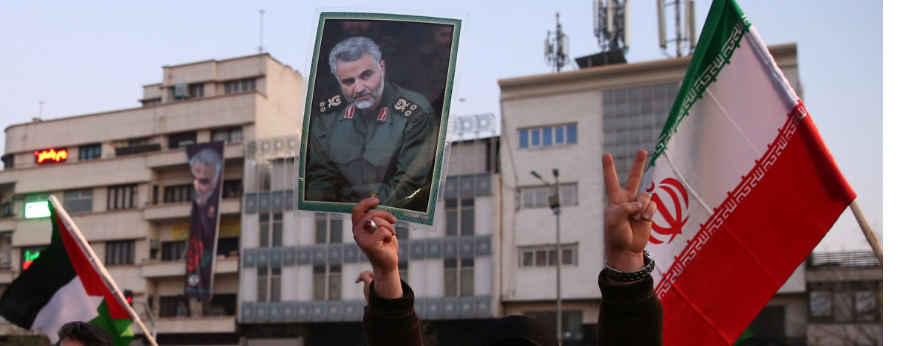
On 28 February 2026, the United States and Israel launched joint air strikes on Iranian nuclear and military facilities, beginning the most significant direct military confrontation between the two countries in decades. What had been months of escalating tension — protests, internet blackouts, sanctions, and increasingly direct threats — crossed into open warfare almost overnight.
This article explains how the U.S.–Iran relationship reached this point, what happened when the conflict began, how it has affected Pakistan and the broader region, and where things stand as of April 2026.
How We Got Here: A Timeline of Escalation
Late 2025: Protests and Internal Pressure
The crisis that led to war did not begin with a military decision. It began with economics. By late 2025, Iran was facing inflation exceeding 40%, a collapsing rial, and widespread unemployment. Protests erupted across the country in December 2025, initially focused on economic grievances but rapidly expanding into broader political demands — including, in some quarters, calls for regime change.
The Iranian government responded with force and with internet blackouts. On 8 January 2026, authorities imposed one of the most comprehensive internet shutdowns in history, cutting off 92 million citizens. Thousands were arrested. International pressure mounted.
January 2026: Trump’s Warning and Rising Tension
U.S. President Donald Trump issued public warnings to Iran not to use excessive force against protesters. Iran’s government framed these warnings as foreign interference and used them domestically to justify tighter security measures. Simultaneously, the Trump administration signalled increasing impatience with Iran’s nuclear programme, which had accelerated significantly after the collapse of the 2015 nuclear deal.
Behind the scenes, the United States and Israel were intensifying military coordination. Intelligence assessments indicated that Iran was approaching nuclear weapons capability faster than previously estimated. The combination of internal instability and nuclear acceleration created a window that both governments concluded they could not ignore.
February 2026: The Decision to Strike
On 28 February 2026, U.S. and Israeli forces launched coordinated air strikes on Iranian nuclear facilities and key military targets. The operation — codenamed “Operation Epic Fury” by the U.S. — involved precision-guided munitions and stealth aircraft costing millions of dollars.
Iran’s Supreme Leader Ali Khamenei was killed during the initial strikes — a development that fundamentally changed the nature of the conflict. His son Mojtaba Khamenei was announced as the new Supreme Leader on 8 March, triggering further protests inside Iran, with demonstrators chanting “Death to Mojtaba” from residential neighbourhoods despite violent security crackdowns.
Iran’s Retaliation and Regional Escalation
Iran’s response was rapid and broad. Rather than limiting retaliation to direct strikes on U.S. or Israeli targets, Iran moved to internationalise the cost of the conflict — targeting energy infrastructure, shipping routes, and U.S. bases across the Gulf region.
Iranian forces struck U.S. military bases in Qatar, the UAE, and Bahrain with missile and drone attacks. Saudi oil fields were targeted. Fuel storage terminals in Kuwait were hit. Water desalination plants in Bahrain and Iran itself were struck. Iranian forces also moved to interdict shipping through the Strait of Hormuz — the narrow waterway through which approximately 20 million barrels of oil pass daily, representing about one-fifth of global supply.
Qatar declared force majeure on its LNG exports following Iranian drone attacks on its infrastructure. Iraq and Kuwait began shutting in oil wells as local storage filled with crude that could not be exported through the disrupted Strait. Oil prices surged — Brent crude briefly touching $119 per barrel in early March before settling near $92 per barrel by mid-March.
Israel simultaneously renewed military operations against Hezbollah in Lebanon, complicating ceasefire efforts and drawing additional actors into the regional confrontation. The Israel-Iran conflict that had begun as a contained air strike campaign expanded into a multi-front regional war involving non-state actors, Gulf states, and competing major powers.
Pakistan’s Position and Role
Pakistan’s position in this conflict has been both vulnerable and diplomatically significant.
Economic Vulnerability
Pakistan is heavily dependent on Gulf energy imports, and the Strait of Hormuz disruption hit immediately. Prime Minister Shehbaz Sharif announced emergency austerity measures including a four-day government work week, 50% of civil servants working from home, and two-week school closures. The PSL 2026 cricket tournament was moved behind closed doors and restricted to Lahore and Karachi to reduce fuel consumption.
Pakistan’s western border with Iran created additional security concerns. Analysts warned of potential spillover into Balochistan through sectarian tensions or proxy activity — a two-front security challenge Pakistan’s government explicitly said it could not afford.
Diplomatic Role
Despite — or perhaps because of — these pressures, Pakistan emerged as a significant diplomatic actor. By April 2026, Pakistan was hosting U.S.–Iran talks in Islamabad, brokered by the Pakistani government, aimed at converting a fragile two-week ceasefire into a lasting agreement. The talks represent Pakistan’s most significant diplomatic engagement in the region in years and reflect its unique position as a country with relationships on multiple sides of the conflict.
What the Conflict Has Done to the Region
Energy Markets
The economic consequences of the U.S.–Iran war have been felt globally but disproportionately in Asia and the developing world. Countries that depend heavily on Gulf oil imports — India, Pakistan, Bangladesh, Sri Lanka, and many others — faced immediate supply disruptions and sharp price increases.
The International Energy Agency described the situation as the “greatest global energy security challenge in history” and coordinated the release of 400 million barrels of strategic petroleum reserves from member countries. Despite this, Brent crude remained significantly above pre-conflict levels through April 2026.
Humanitarian Impact in Iran
Inside Iran, the combination of military strikes, continued internet shutdowns, and economic pressure has created a severe humanitarian situation. Human rights organisations have documented thousands of deaths in protest-related violence prior to the conflict and significant civilian casualties from the military strikes. The internet remains almost entirely shut down — by early April, Iranians had spent close to two-thirds of the year in digital darkness.
The assassination of Khamenei and the appointment of his son as Supreme Leader — perceived by many Iranians as a dynastic succession in a supposedly revolutionary state — deepened public resentment, sustaining protests even under wartime conditions.
Gaza and the Board of Peace
The U.S.–Iran conflict severely disrupted the Gaza peace process. The Trump-led Board of Peace held its inaugural meeting on 18 February 2026 — just ten days before the Iran strikes began. It has not met again. Key mediators Egypt and Qatar, their own economies under pressure from energy disruption, have shifted focus to managing the Iran conflict’s effects. The Board of Peace’s $17 billion reconstruction pledge remains uncommitted.
Where Things Stand in April 2026
As of April 2026, a fragile ceasefire between the U.S. and Iran is in place, but its durability is uncertain. The ceasefire has not ended all hostilities — Israel continues to attack Hezbollah in Lebanon, and Iran insists the ceasefire applies to those operations while Israel insists it does not.
U.S.–Iran talks in Islamabad, brokered by Pakistan, are underway. Vice President JD Vance has warned Iran not to “play games” with the negotiations. The talks aim to establish a more durable framework that would address both the immediate military ceasefire and the underlying nuclear issue that triggered the conflict.
The Strait of Hormuz, while no longer fully closed, remains functionally impaired according to insurance companies and shipping operators who describe it as too risky for normal commercial traffic. Saudi Arabia and the UAE — the only Gulf producers with alternative export routes — are operating those pipelines at or near capacity.
Iran’s internal politics remain volatile. Protests continue in some cities despite wartime security deployments. The new Supreme Leader Mojtaba Khamenei has limited political experience and faces immediate legitimacy challenges. Whether the Islamic Republic emerges from this crisis in a fundamentally weakened or reconsolidated form remains one of the most consequential open questions in global politics.
What This Means for Pakistan Going Forward
Pakistan faces a genuinely difficult strategic environment as a result of the U.S.–Iran conflict. Its economy is under pressure from energy costs. It’s western border is destabilised. Its diplomatic bandwidth is stretched between managing domestic austerity, participating in the Gaza Board of Peace, and hosting the U.S.–Iran talks.
But Pakistan’s diplomatic role in the Islamabad talks also represents an opportunity. A successful mediation — converting the ceasefire into a lasting framework — would significantly elevate Pakistan’s standing in both the Islamic world and in its relationship with the United States. The government of Prime Minister Shehbaz Sharif appears to understand this, and Pakistani diplomats have been quietly active throughout the crisis.
The longer-term lesson for Pakistan is strategic. The country’s dangerous dependence on Gulf energy — exposed so dramatically by the Strait of Hormuz disruption — strengthens the case for accelerating domestic solar and renewable energy development. A crisis that cost Pakistan billions in higher energy costs and economic disruption should, if anything, accelerate the diversification that policymakers have long discussed but rarely implemented.
Frequently Asked Questions
When did the U.S.–Iran war begin?
The U.S. and Israel launched joint air strikes on Iran on 28 February 2026, beginning the most significant direct military confrontation between the two countries in decades.
What triggered the conflict?
A combination of factors: Iran’s acceleration of its nuclear programme, the internal protest crisis and violent crackdown of January 2026, and a U.S.–Israeli intelligence assessment that Iran was approaching nuclear weapons capability. The assassination of Supreme Leader Ali Khamenei during the initial strikes fundamentally altered the nature of the conflict.
How has Pakistan been affected?
Pakistan faced immediate energy supply disruptions due to the Strait of Hormuz closure, forcing government austerity measures. Pakistan is also hosting U.S.–Iran peace talks in Islamabad, giving it a significant diplomatic role in resolving the crisis.
Is there a ceasefire?
A fragile two-week ceasefire was announced, but its implementation is disputed — particularly regarding Israel’s continued operations against Hezbollah in Lebanon. U.S.–Iran talks in Islamabad are attempting to convert it into a more durable framework.
What happened to Iran’s Supreme Leader?
Ali Khamenei was killed during the initial U.S.–Israeli strikes on 28 February 2026. His son Mojtaba Khamenei was announced as the new Supreme Leader on 8 March, triggering further domestic protests inside Iran.
Stay updated with the latest international news at Shark Times.



Leave a Reply
You must be logged in to post a comment.